A gutshot—also known as an inside straight draw—is one of the most common yet frequently misunderstood drawing hands in poker. Unlike an open-ended straight draw, which gives you eight outs, a gutshot offers just four cards that can complete your straight. While it may seem tempting to chase, playing gutshots correctly requires discipline, precise odds calculation, and situational awareness.
In this expert-level guide, you’ll learn everything about gutshots: how they work, their equity compared to other draws, when to chase them profitably, and how to avoid the classic traps that cost players chips and confidence. Whether you’re grinding microstakes cash games or deep in an MTT, mastering the gutshot will sharpen your post-flop decision-making.
- What Is a Gutshot Straight Draw?
- Odds and Equity of a Gutshot
- When Is a Gutshot Worth Chasing?
- 1. When You Have Additional Equity
- 2. In Position with Fold Equity
- 3. In Multi-Way Pots with High Implied Odds
- Common Mistakes with Gutshots
- Gutshots vs. Other Draws: A Strategic Comparison
- How to Play Gutshots on the Turn and River
- Advanced Tips for Gutshot Mastery
- Conclusion: Play Gutshots Smart, Not Hopeful
What Is a Gutshot Straight Draw?
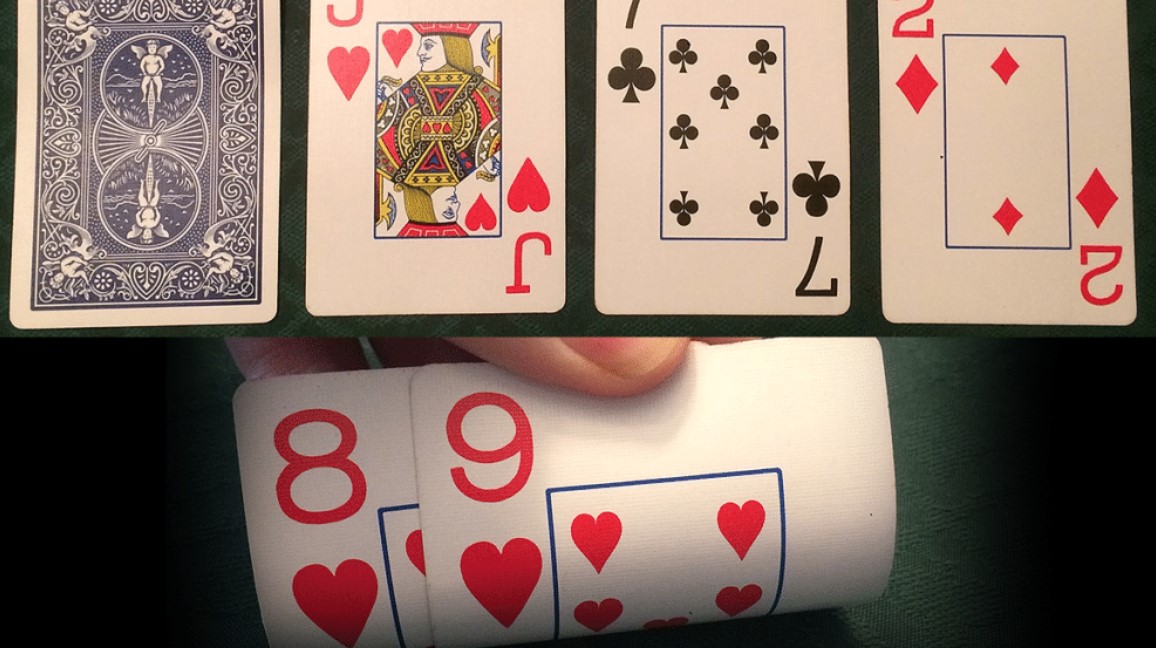
A gutshot straight draw occurs when you’re missing one internal card to complete a five-card straight. For example, if you hold 8♠7♣ and the board shows A♦6♥5♠, you need exactly a 9 or a 4 to make a straight—four specific cards (9♠, 9♥, 9♦, 9♣ or 4♠, 4♥, 4♦, 4♣), hence “four outs.”
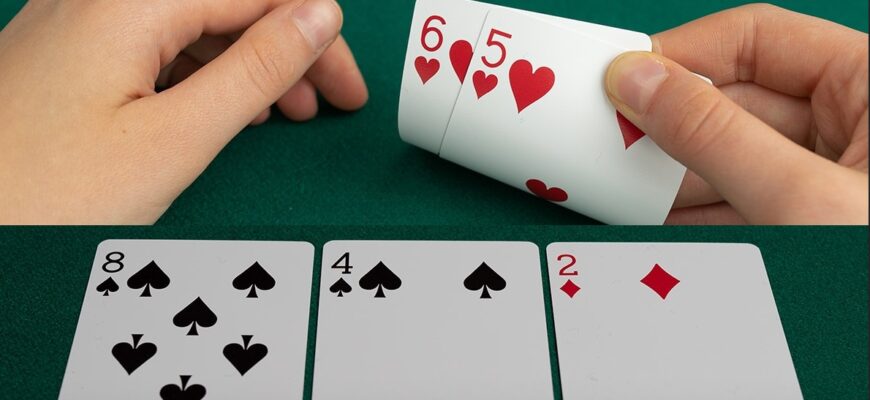
This contrasts with an open-ended straight draw, where two ranks complete your straight (e.g., holding 8-7 on a 6-5 board gives you outs to any 4 or 9—eight total cards). Because gutshots have half the outs, they’re significantly weaker and must be played with caution.
Gutshots often appear alongside overcards, backdoor flush potential, or pair equity, which can transform a marginal draw into a strong semi-bluffing candidate. But on their own, they rarely warrant large investments unless the price is right.
Odds and Equity of a Gutshot
With only four outs, a gutshot has limited raw equity:
- Flop to Turn: ~8.5% chance to hit (4 outs × 2 ≈ 8%)
- Flop to River: ~16.5% chance to hit (4 outs × 4 ≈ 16%)
This means you’ll miss your gutshot more than 83% of the time by the river. To justify calling a bet, you generally need pot odds of at least 5:1 (i.e., you must risk $1 to win $5 or more). Without those odds—or implied odds—you’re making a losing play in the long run.
For a deeper dive into calculating your chances, see our guide on how to count outs in poker. Always remember: equity isn’t just about hitting—it’s about whether the payoff justifies the risk.
When Is a Gutshot Worth Chasing?
1. When You Have Additional Equity
A pure gutshot is rarely worth chasing. But if your hand includes extra value—like overcards, a backdoor flush draw, or a pair—your total equity increases substantially.
For example, holding K♠Q♠ on a J♦9♣2♥ flop gives you a gutshot to the ace-high straight plus two overcards. If your opponent has a hand like T♠T♣, you actually have around 26% equity—not just 16%. This turns a borderline call into a profitable one with decent pot odds.
Similarly, a gutshot with a backdoor flush draw (e.g., two spades in your hand on a flop with one spade) adds ~4% equity, making your total closer to 20%—much more playable.
2. In Position with Fold Equity
Even if you don’t hit your gutshot, being in position allows you to bluff profitably on later streets. This is where fold equity comes into play.
If you’re on the button with 9♠8♠ on a T♦7♣3♥ flop against a single opponent who checks to you, betting can serve two purposes: you may win the pot immediately (fold equity), or you may hit your straight on the turn or river (hand equity). This dual-path potential makes semi-bluffing with gutshots far more viable in position.
3. In Multi-Way Pots with High Implied Odds
In deep-stacked cash games or early MTT stages, gutshots can be worth chasing if you’re likely to win a huge pot when you hit—especially against opponents who overplay top pair or overpairs.
For instance, if you’re in a four-way pot with 50 big blinds and hold 6♠5♠ on a 8♦7♣2♥ flop, you have a gutshot to the nut straight. If you spike a 9 and someone has A♦A♠, you’re likely to get paid off big. That’s the essence of implied odds: future winnings that justify a current call.
Common Mistakes with Gutshots
- Chasing with no odds: Calling a large bet on the flop with just a gutshot and no additional equity is a classic leak. Always calculate pot odds first.
- Overvaluing non-nut gutshots: A gutshot to a non-nut straight (e.g., 7-5 on a 9-8-2 board, needing a 6) is dangerous—you could lose to a higher straight.
- Ignoring board texture: On paired or coordinated boards, your gutshot may be dominated or even counterfeit. Always assess what your opponent might hold.
- Chasing out of position: Without the ability to control the pot or apply pressure, your fold equity drops to near zero—making pure draws much less attractive.
- Confusing gutshots with open-enders: Many beginners treat all straight draws the same. Remember: gutshots have half the outs and require much better prices.
Gutshots vs. Other Draws: A Strategic Comparison
Here’s how gutshots stack up against other common draws:
- Flush draw: 9 outs (~35% equity by river) — much stronger than a gutshot.
- Open-ended straight draw: 8 outs (~32% equity) — still nearly double a gutshot’s value.
- Gutshot + flush draw: 13+ outs — now you’re in premium semi-bluff territory.
- Gutshot + overcards: ~10–12 outs depending on board — playable with decent odds.
Always ask: “What’s my total equity?” before committing chips. A lone gutshot rarely qualifies—but combined draws often do.
How to Play Gutshots on the Turn and River
By the turn, your gutshot’s chances drop dramatically—only ~8.5% to hit on the river. This means you should rarely call large bets unless you have strong implied odds or a read that your opponent is bluffing.
On the river, if you haven’t hit your gutshot, your only winning path is a bluff—and that requires careful consideration. Ask yourself:
- Does my betting line look credible?
- Is my opponent capable of folding a decent hand?
- Is the river card a good bluffing card (e.g., completing potential straights or flushes)?
For advanced strategies on navigating these tough spots, refer to our guide on how to play the turn and river.
Advanced Tips for Gutshot Mastery
- Use gutshots as bluff catchers: Sometimes your gutshot isn’t about making a straight—it’s about calling down light when you suspect a bluff, especially if your cards block strong value hands.
- Block nut straights: Holding the card that completes the nut straight (e.g., you have the 9 when the board is T-8-7) reduces the chance your opponent has the nuts—making your bluff more credible.
- Avoid gutshots in short-stack MTTs: With shallow stacks, implied odds vanish. In late stages of a tournament, folding gutshots unless priced in is usually correct.
- Track opponent tendencies: If a player folds to turn pressure 70% of the time, your gutshot semi-bluff becomes highly profitable—even if you rarely hit.
Conclusion: Play Gutshots Smart, Not Hopeful
A gutshot straight draw isn’t worthless—but it’s far from automatic. Its value depends entirely on context: your position, your opponent’s range, the board texture, and the price you’re being offered. Never chase a gutshot out of boredom or hope; always base your decision on odds, equity, and fold potential.
Start by reviewing your recent hands: how many gutshot calls were actually mathematically justified? Adjust your strategy to fold more in hopeless spots and semi-bluff more when you have fold equity. Over time, this disciplined approach will save you chips, reduce downswing severity, and boost your overall win rate.
Remember: poker isn’t about making straights—it’s about making the right decisions. And with gutshots, less is often more.