
Every poker player—no matter how skilled—will face downswings. These inevitable stretches of bad luck can drain your bankroll, shake your confidence, and trigger emotional decisions that compound losses. But downswings aren’t a sign you’re a bad player; they’re proof you’re playing a game dominated by variance.
In this comprehensive guide, we’ll explain why downswings happen, how to measure their severity, and—most importantly—how to navigate them without going broke or losing your mind. Whether you play microstakes cash games or high-roller MTTs, mastering downswing management is essential for long-term success.
- What Is a Downswing in Poker?
- Why Downswings Happen: It’s Math, Not Magic
- Signs You’re in a Downswing (Not Just Tilt)
- How to Survive a Downswing: 7 Proven Strategies
- 1. Stick to Proper Bankroll Management
- 2. Review Hands Objectively
- 3. Reduce Volume or Take Breaks
- 4. Avoid Stake Jumps
- 5. Focus on Process, Not Results
- 6. Talk to Other Players
- 7. Revisit Fundamentals
- Common Downswing Mistakes to Avoid
- When to Seek Help
- Turning Downswings into Growth Opportunities
- Final Thoughts: Downswings Don’t Define You
What Is a Downswing in Poker?
A downswing is a prolonged period where your results fall significantly below your expected win rate—even if you’re making correct decisions. It’s not just a few bad sessions; it’s weeks or months of negative outcomes despite solid play.
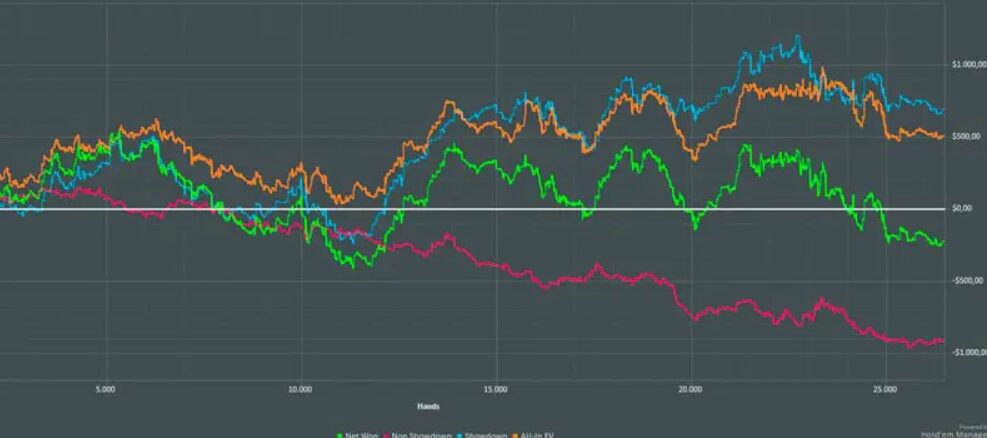
Downswings are fueled by poker’s inherent variance. You can lose with pocket aces to 7-2 offsuit. You can get coolered three times in a row. You can run into the nuts every time you flop a set. None of this means you’re playing poorly—it just means luck is temporarily working against you.
The key is to distinguish between a true downswing (bad luck with good decisions) and consistent losing due to leaks in your strategy. Tracking software and honest self-review help you tell the difference.
Why Downswings Happen: It’s Math, Not Magic
Poker is a game of skill in the long run—but short-term results are heavily influenced by randomness. Even with a +5% ROI in tournaments, you can easily lose 50 buy-ins in a row due to the high variance of MTTs.
Consider this: if you flip a fair coin 100 times, you won’t always get exactly 50 heads. Sometimes you’ll get 40. In poker, “coin flips” like A-K vs. pocket pairs happen constantly. Over time, they even out—but during a downswing, you’ll lose more than your fair share.
High-variance formats like multi-table tournaments (MTTs) or Pot-Limit Omaha produce deeper, longer downswings than cash games. That’s why bankroll management isn’t optional—it’s survival.
Signs You’re in a Downswing (Not Just Tilt)
- Your win rate is negative despite solid fundamentals (e.g., you’re folding correctly, value betting well, avoiding tilt).
- You’re losing with strong hands repeatedly (e.g., sets losing to straights, top pair losing to two pair).
- Your session notes show good decisions but bad outcomes.
- Your tracking software shows you’re running below expected value (EV).
If, however, you’re calling light on the river, over-bluffing, or chasing gutshots with no odds, you’re not in a downswing—you’re leaking chips. Honest self-assessment is critical.
How to Survive a Downswing: 7 Proven Strategies
1. Stick to Proper Bankroll Management
Never play above your bankroll. A standard rule: 50 buy-ins for cash games, 100+ for MTTs. If you’re down 30 buy-ins, drop stakes temporarily. As covered in our guide to building a bankroll with freerolls, preserving capital is more important than ego.
2. Review Hands Objectively
Use software like PokerTracker to filter losing hands. Ask: “Was this decision +EV?” If yes, accept the loss. If no, fix the leak—but don’t confuse bad outcomes with bad plays.
3. Reduce Volume or Take Breaks
Playing while frustrated leads to tilt. If you’ve lost three sessions in a row, step away. Go for a walk. Watch a training video. Return when you’re calm and focused.
4. Avoid Stake Jumps
It’s tempting to “win it back fast” by moving up—but this often backfires. Higher stakes mean tougher opponents and bigger variance. Stay put until you’re consistently profitable again.
5. Focus on Process, Not Results
Instead of tracking daily profit, track whether you followed your strategy: Did you fold correctly? Did you bet for value? Did you avoid hero calls? Process-oriented thinking builds resilience.
6. Talk to Other Players
Isolation worsens downswings. Join a poker forum or Discord. You’ll quickly realize everyone—even pros—goes through brutal stretches. Shared experience reduces shame and panic.
7. Revisit Fundamentals
Re-read core concepts like position, preflop hand selection, and post-flop play. Sometimes, a refresher rebuilds confidence and sharpens your edge.
Common Downswing Mistakes to Avoid
- Chasing losses: Playing longer or higher to “get even” is the fastest path to ruin.
- Over-adjusting: Suddenly folding all top pair because you lost with it twice is overcorrection.
- Ignoring mental health: Downswings cause stress, anxiety, and sleep issues. Address them seriously.
- Blaming bad luck exclusively: While variance is real, always ask if a leak contributed.
One dangerous myth: “I need to win this session.” Poker isn’t about winning every day—it’s about making +EV decisions over thousands of hands.
When to Seek Help
If a downswing affects your mood, relationships, or finances beyond poker, it’s time to pause. Set strict loss limits. Use site self-exclusion tools if needed. Remember: poker is a game, not your identity.
Also, consider whether you’re playing the right format. If MTTs give you 3-month downswings that wreck your mental health, switch to cash games or SNGs—lower variance, steadier results.
Turning Downswings into Growth Opportunities
The best players use downswings as diagnostic tools. They reveal:
– Hidden leaks in your strategy
– Emotional triggers (e.g., getting frustrated by bluffs)
– Gaps in knowledge (e.g., poor turn and river play)
Keep a downswing journal. Note patterns: “Lost 5 times when I called river bets with second pair.” That’s a leak to fix—not just bad luck.
Over time, surviving downswings builds mental toughness. The player who can stay disciplined through 100 losing buy-ins is the one who wins long-term.
Final Thoughts: Downswings Don’t Define You
Downswings are not a punishment—they’re a feature of poker. The game rewards those who can endure variance without breaking. Protect your bankroll, manage your emotions, and trust your process.
Remember: every great poker player has been where you are. What separates them isn’t luck—it’s how they respond. Stay patient, stay disciplined, and know that the upswing always comes… as long as you’re still in the game.