Spin & Gold is GGPoker’s high-octane Sit & Go format where three or six players battle for a randomly multiplied prize pool—sometimes as high as 100,000x the buy-in. Games last under 10 minutes, decisions are constant, and variance is extreme. But beneath the lottery-like surface lies a game of skill, range discipline, and bankroll control. This guide breaks down everything from blind structures to payout odds—and reveals why most players lose money despite the “free roll” feel.
Spin & Gold takes a 7% rake—standard for jackpot SNGs—but the real cost comes from poor preflop decisions and emotional responses to bad beats.
- How Spin & Gold Actually Works
- Blind Structure and Time Pressure
- Payout Tables: What You Actually Win
- Insurance: A Trap Disguised as Protection
- Strategy: Preflop Is Everything
- 3-Max Opening Ranges (Button)
- Big Blind Defense
- Bankroll Management: The Silent Killer
- Leaderboards and Happy Hour: Extra Value
- Who Should Play Spin & Gold?
How Spin & Gold Actually Works
There are two formats:
- 3-Max: 3 players, 9 buy-in levels ($0.25 to $200)
- 6-Max: 6 players, 6 buy-in levels ($0.25 to $20)
After registration, a wheel spins to determine the prize multiplier—ranging from 2x to 100,000x. The total prize pool = buy-in × multiplier. For example, a $10 buy-in with a 50x multiplier creates a $500 prize pool.
Do all players get paid? Only in high-multiplier games. At 2x–5x (3-Max) or 4x–8x (6-Max), only the winner gets paid. Higher multipliers split prizes across 2–6 finishers.
Blind Structure and Time Pressure
Blinds escalate rapidly—starting at 10/20 and reaching 1500/3000 by Level 26. Stack depth varies by multiplier:
| Multiplier | Starting Stack | Level Duration |
|---|---|---|
| x2–x3 | 300 chips | 1–2 min per level |
| x4–x10 | 500 chips | 2–10 hands |
| x50+ | 800–1000 chips | 15–20 hands |
With shallow stacks and fast blinds, you’ll face all-in decisions within minutes. There’s no room for post-flop finesse—this is preflop poker, pure and simple.
Never play multiple tables unless you’ve mastered single-table strategy. Autopilot play in Spin & Gold leaks chips faster than any other format.
Payout Tables: What You Actually Win
Most multipliers are low. In 3-Max, nearly 95% of games land on x2–x5. High multipliers are rare:
- x100,000: 1 in 5 million games
- x100: ~1 in 25,000 games
- x10: ~1 in 40 games
Sample payouts for a $10 buy-in (3-Max):
- x2: $20 to 1st
- x10: $80 to 1st, $20 to 2nd
- x50: $300 to 1st, $150 to 2nd, $100 to 3rd
- x100,000: $500,000 to 1st
Because low multipliers dominate, your long-term winrate depends almost entirely on beating opponents in x2–x10 games—not chasing jackpots.
Chasing big multipliers emotionally leads to tilt. Treat every spin as a $20 SNG—even if the wheel shows x100,000.
Insurance: A Trap Disguised as Protection
GGPoker offers insurance: pay an extra buy-in to get refunded if you hit a low multiplier (x2 in 3-Max, x4 in 6-Max). It sounds safe—but it’s mathematically flawed.
Since low multipliers occur ~95% of the time, insurance refunds your buy-in often. But you’re paying 100% extra to recover 100% of a small loss—while sacrificing upside on high multipliers. Over time, this reduces your expected value (EV) significantly.
Insurance is only “profitable” if you’re a losing player who wants to delay bankroll death. Winning players should never use it.
Strategy: Preflop Is Everything
With average stack depths of 10–20 big blinds, post-flop play is minimal. Your edge comes from precise preflop ranges:
3-Max Opening Ranges (Button)
- vs tight blinds: open 70%+ of hands
- vs calling stations: tighten to top 50%
Big Blind Defense
- Against standard opens, defend with any pair, suited ace, and broadways
- Never fold 22+ or A2s+ out of fear—pot odds justify calls
Use push/fold charts for stacks under 10 BBs. Tools like fold equity calculators help determine when shoving is +EV.
Pro habit: Study one hand range per week. Master button opens first, then big blind defense. Post-flop rarely matters in Spin & Gold.
Bankroll Management: The Silent Killer
Due to extreme variance, you need a larger bankroll than regular SNGs:
- Micro-stakes ($0.25–$1): 100 buy-ins minimum
- Mid-stakes ($3–$10): 150+ buy-ins
- High-stakes ($20+): 200+ buy-ins

If you drop 30 buy-ins in a row (common during downswings), don’t move down—stop and review. Emotional reloading destroys more bankrolls than bad luck.
Combine Spin & Gold with Ocean Rewards. Every game earns Tide Points, turning rake into 24–80% cashback—your true edge over time.
Leaderboards and Happy Hour: Extra Value
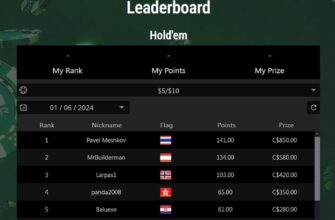
GGPoker runs daily Spin & Gold leaderboards with C$ prizes. Points scale with buy-in and finish position. During Happy Hour (22:00–23:59 UTC-8), points are multiplied by 1.5x.

Example: Winning a $10 Spin & Gold earns 120 points. During Happy Hour, that’s 180 points—enough to climb into prize tiers with consistent play.
Leaderboard prizes are paid in Cash Game Dollars (C$), usable in any cash game. They effectively reduce your net rake.
Who Should Play Spin & Gold?
- Time-limited players: Perfect for 15-minute sessions between work or study.
- Strong preflop players: If you’ve mastered preflop hand selection, you’ll crush recreational opponents.
- Grinders with discipline: Those who track ROI and avoid tilt can profit long-term.
Avoid Spin & Gold if you hate variance, rely on post-flop reads, or play while distracted. This format punishes inconsistency harder than any other.
“Spin & Gold isn’t a lottery—it’s a pressure cooker. The heat separates winners from dreamers.”
Actionable advice: Play one table for 30 minutes daily at your target stake. Record every session. After 100 games, calculate your ROI. If it’s positive, add a second table. If not, go back to studying ranges.