If you’re interested in learning poker, the first thing to focus on is the rules. New players can find poker terms confusing, especially those used by seasoned pros. So, this guide explains the rules of poker for beginners, in simple terms and without complicated jargon.
To start, it’s worth noting that there are many types of poker, each with unique rules. Here, we’ll cover the rules of No-Limit Texas Hold’em, the most popular card game at the moment.
Game Objectives
The goal of poker varies depending on the game format. In a tournament, your primary objective is to reach the final table and win prize money. In cash games, the aim is to win as many chips as possible.
While both goals are connected, since you also need chips to reach the final table in a tournament, the main aim in Texas Hold’em is to win chips (or money) from your opponents.
Even if you’re new to poker, you likely know that the winner has the highest-ranking hand. You can check out hand rankings through the link provided. To win, you can either make the strongest hand or get your opponent to fold before the showdown. This latter method involves convincing them that your hand is too strong to compete with, which often requires a good bluff—a technique you can also learn more about through the provided link.
Game Order
Understanding the gameplay order is crucial for beginners. Texas Hold’em can be played with 2 to 9 players. Cards are dealt by a dealer, who may be one of the players or a designated person. The game uses a 52-card deck, without jokers.
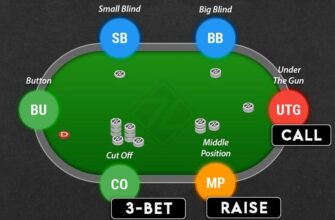
The game begins with two forced bets, known as blinds. The player to the dealer’s left posts the small blind, while the next player posts the big blind, twice the amount of the small blind. These spots are referred to as the small blind and big blind, respectively.

In the image, you can see that the player to my left posted a small blind of 15 chips, while the next player posted a big blind of 30 chips.
The dealer then deals two cards to each player, starting from the small blind. These cards are dealt clockwise, one card at a time. Players can look at their own cards without revealing them to others. Then, betting begins, starting with the player to the left of the big blind.
Betting in Poker
A key part of the poker rules for beginners is understanding betting rounds. Based on the strength of their hand, each player can choose one of the following options:
- Fold – The player opts out of the round, losing no chips if they’re not on the blinds.
- Call – The player matches the previous bet to stay in the hand with minimal investment.
- Raise – In No-Limit Hold’em, a player can raise any amount, even going “all-in” (betting all their chips).
Betting continues until all players have matched each other’s chips or folded. If a player can’t match the bet but still wants to play, they can go all-in and participate with a smaller amount.
In the image, you’ll see that I matched a bet with 30 chips in the next hand after folding previously.

Phases of Play
After all bets are matched, the dealer places three community cards face-up on the table. Each player then assesses the strength of their hand using their own two cards and these three community cards. Players make decisions based on the strength of their hand, and the second betting round begins. Betting starts with the small blind, or the first active player to their left.
In the screenshot, you’ll notice that the small blind bet 120 chips. My hand contains 7♣6♥, giving me a pair of sevens with the community cards, so I decided to stay in this round.

In the second round, players have an additional option: Check. This means they can remain in the game without betting, provided no previous players have bet. Betting concludes when all players have equalized their bets or checked.
The game can end on any round if all but one player fold, in which case the last remaining player takes the pot.
After this, if at least two players are still in, the dealer places a fourth community card on the table. Once again, players evaluate their hands, combining their hole cards with the four on the table. Betting proceeds as before, with the small blind or the first active player to their left.

The image shows that the fourth card is a three, which didn’t improve my hand. By now, four players out of nine remain.
Once betting concludes, the dealer deals the fifth and final community card. After this final betting round, remaining players reveal their hands to see who has the strongest combination.
I got lucky, as the fifth card was another seven, giving me a set (three of a kind). Although the small blind went all-in, I decided to call (match the bet).

In Texas Hold’em, hands consist of five cards, chosen from a combination of the player’s two hole cards and the five community cards. This means the winning hand could include both hole cards, one, or none, with any number of community cards.
As it turned out, calling paid off—my set of sevens beat my opponent’s two pairs, and I won a nice pot. The final image shows my hand, formed with two hole cards and three community cards.

This is how a hand is played in poker. After each hand, the blinds move one seat to the left, so everyone gets a turn.
I hope this guide is clear and helpful for beginners. Good luck at the tables!