Multi-Table Tournaments (MTTs) are the heartbeat of competitive poker—offering massive fields, life-changing prize pools, and a true test of skill, patience, and adaptability. Whether you’re grinding $2 freerolls or chasing a WSOP bracelet, understanding MTT structure and strategy is essential to consistent success.
In this comprehensive guide, we’ll break down the different types of MTTs, map out winning strategies for every tournament phase, and reveal how to manage your bankroll and mindset for long-term profitability. You’ll also learn how to leverage ROI in poker to measure your progress and avoid common traps that sink even skilled players.
- What Is a Multi-Table Tournament (MTT)?
- Types of Multi-Table Tournaments
- 1. Freezeout MTTs
- 2. Rebuy and Add-On MTTs
- 3. Turbo and Hyper-Turbo MTTs
- 4. Bounty and Progressive Knockout (PKO) MTTs
- 5. Satellite and Freeroll MTTs
- MTT Strategy by Phase
- Early Stage: Survive and Observe
- Middle Stage: Accumulate with Purpose
- Bubble Phase: ICM Dictates Play
- Deep in the Money: Maximize Your Finish
- Bankroll Management & ROI for MTT Players
- Common MTT Mistakes to Avoid
- Advanced MTT Tips for Consistent Winners
- Conclusion: Build a Repeatable MTT Process
What Is a Multi-Table Tournament (MTT)?
An MTT is a poker tournament that begins with multiple tables of players and continues until one player has all the chips. Unlike cash games or heads-up matches, MTTs require a unique blend of aggression, discipline, and situational awareness as the dynamics shift dramatically from early to late stages.
MTTs differ from Sit & Gos (SNGs), which typically start when a fixed number of players register—usually 6, 9, or 10—and involve only one or two tables. In contrast, MTTs can start with dozens or even tens of thousands of entrants, making them far more volatile but also far more rewarding for skilled players.

Understanding your tournament type—be it a freezeout, rebuy, or turbo—is the first step to crafting a winning game plan. Let’s explore the most common MTT formats you’ll encounter online and live.
Types of Multi-Table Tournaments
1. Freezeout MTTs
In a freezeout, you get one shot. Once you lose your chips, you’re out—no rebuys or add-ons allowed. This is the most common MTT format and the standard for major live events like the WSOP Main Event.
Freezeouts reward patience and precision. Early-stage play should be tight and position-aware. As the tournament progresses and blinds rise, you’ll need to expand your range carefully. Learn more about the foundational structure in our guide to freezeout poker.
2. Rebuy and Add-On MTTs
Rebuy tournaments allow you to purchase additional chips if your stack falls below a certain threshold—or even if you bust—during a designated rebuy period (often the first 60–90 minutes). After that window closes, an add-on is usually offered to all remaining players, regardless of stack size.
These formats create deeper average stacks and larger prize pools. Skilled players often benefit most because they can leverage bigger stacks post-rebuy to apply pressure. However, the increased investment means ROI becomes even more critical—only enter if your skill edge justifies the added cost.
3. Turbo and Hyper-Turbo MTTs
Turbo MTTs feature faster blind structures—typically doubling every 5–10 minutes instead of 15–30. Hyper-turbos accelerate even more, often forcing all-in or fold decisions within minutes.
In turbos, hand ranges widen dramatically from the start. Preflop aggression is key, and post-flop play is rare. While variance is high, solid short-stack strategy and a calm mindset can yield strong results. These tournaments are ideal for players looking to accumulate volume quickly.
4. Bounty and Progressive Knockout (PKO) MTTs
In bounty MTTs, part of the buy-in goes toward a “bounty” on each player. Eliminate an opponent, and you claim their bounty. In PKOs, half your bounty is added to your own stack when you eliminate someone—creating escalating rewards.
Bounty formats subtly shift optimal strategy. You may call slightly wider against short stacks to hunt bounties, but avoid reckless plays that jeopardize your own tournament life. The value of a bounty adds expected value to certain confrontations, especially near the bubble.
5. Satellite and Freeroll MTTs
Satellites award entries to bigger tournaments instead of cash. Freerolls require no buy-in and are perfect for building your bankroll from zero. While freerolls attract recreational players, the sheer field sizes demand patience and late-stage precision.
In satellites, your goal isn’t to win the tournament—it’s to finish in the top X% to secure a ticket. This means playing more conservatively near the payout zone and avoiding unnecessary coinflips unless deeply in the money.
MTT Strategy by Phase
Early Stage: Survive and Observe
The early levels (first 1–3 blind levels) are not about accumulating chips—they’re about gathering intel. Blinds are tiny relative to your stack (often 100–200 big blinds), so there’s little pressure to gamble.
Focus on premium hands in early position and playable suited connectors or broadways in late position. Avoid marginal calls out of position. Use this phase to note who’s loose, who’s tight, and who’s tilting—information that pays dividends later.
Always consider position at the poker table. The button and cutoff are your most profitable seats—widen your opening ranges there, especially when the blinds are passive.
Middle Stage: Accumulate with Purpose
As stacks shrink to 30–50 big blinds, the game transitions from post-flop poker to pre-flop dominance. Now is the time to apply pressure with isolation raises, 3-bets, and well-timed bluffs.
Steal blinds aggressively from late position, but be prepared to fold if faced with a strong 3-bet—unless you hold a hand with solid equity like suited aces or medium pairs. Remember: chip preservation still matters, but so does stack growth.
Post-flop play remains important. Learn how to navigate post-flop strategy with medium-strength hands like top pair or second pair. Don’t overcommit without a clear plan—many players leak chips by getting “sticky” with decent but vulnerable holdings.
Bubble Phase: ICM Dictates Play
The bubble—when just a few eliminations remain before payouts begin—is where many players make fatal errors. The key concept here is ICM (Independent Chip Model), which accounts for chip equity vs. real-money equity.
Short stacks should tighten up; medium stacks can apply pressure on the shortest players; big stacks can bully but should avoid high-variance flips against other big stacks. If you’re on the short end, avoid coinflip situations unless absolutely necessary.
For a deeper dive into this critical phase, see our dedicated article on the bubble in poker.
Deep in the Money: Maximize Your Finish
Once in the money, your goal shifts from survival to maximizing prize jumps. The difference between 15th and 10th place might be small, but between 3rd and 1st could be 10x your buy-in.
Adjust your aggression based on opponents’ stack sizes and risk tolerance. Some players become ultra-tight just to move up a payout rung—exploit them by stealing their blinds relentlessly. Others go berserk to climb quickly—fold to their shoves unless you have a premium holding.
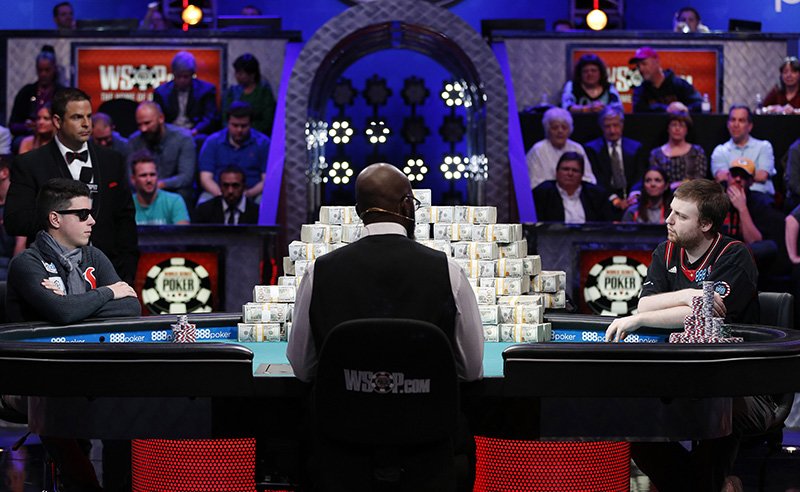
Stay calm. Emotional decisions lead to tilt in poker, which is deadly in the late stages. Stick to your strategy, trust your reads, and remember: every chip has real monetary value now.
Bankroll Management & ROI for MTT Players
MTTs are inherently high-variance. Even elite players can endure 100+ buy-in downswings. That’s why proper bankroll management is non-negotiable.
- Freerolls/Satellites: No bankroll needed—but treat them seriously.
- Micro-stakes MTTs ($1–$5): 100–200 buy-ins recommended.
- Mid-stakes ($10–$100): 150+ buy-ins.
- High-stakes ($200+): 200+ buy-ins + strong ROI track record.
Track your performance using ROI (Return on Investment). A 20% ROI at $3 MTTs is excellent; 5% at $500 MTTs is elite. Use tools like PokerTracker to monitor win rates, ITM (in-the-money) frequency, and average finish position.
Avoid chasing losses. If you’re on a downswing, scale down stakes or take a break. MTT success is a marathon, not a sprint.
Common MTT Mistakes to Avoid
- Playing too tight early: Waiting for AA or KK will bleed you dry as blinds rise.
- Overvaluing top pair on wet boards: A pair of aces on A♠K♦Q♥ is often a bluff-catcher—not a value hand.
- Ignoring antes and effective stack sizes: Once antes kick in, pot sizes grow, and 20-big-blind stacks play very differently than 40-big-blind stacks.
- Misreading the board: Always assess possible straights, flushes, and full houses. Learn how to read the board in poker accurately.
- Forgetting opponent tendencies: A “nit” who suddenly leads into you on the river likely has the nuts—not a bluff.
Advanced MTT Tips for Consistent Winners
- Use fold equity on the turn and river: In big pots, sizing large bluffs on later streets forces tough decisions. Master this in our guide to playing the turn and river.
- Balance your 3-bet ranges: Mix value hands (like QQ+) with bluffs (like A5s) to stay unpredictable.
- Adjust to table dynamics: If everyone is tight, open 50% of hands from the button. If it’s a splashy table, tighten up and let them cannibalize each other.
- Know when to check: Sometimes the best play with a strong hand is to check and induce a bluff—especially out of position on dry boards.
- Study hand histories: Review key spots where you were unsure. Did you misjudge equity? Overestimate fold equity? Continuous learning separates grinders from winners.
Conclusion: Build a Repeatable MTT Process
Winning at MTTs isn’t about hitting lucky rivers—it’s about making better decisions than your opponents over thousands of hands. Focus on playing the right hands in the right positions, adapting to each tournament phase, and managing your bankroll like a pro.
Start small, track your ROI, and gradually move up as your results prove your edge. Use freerolls to build initial capital, then transition to low-buy-in MTTs where skilled play truly shines. Most importantly, stay disciplined through downswings and avoid emotional decisions that destroy long-term profitability.
MTTs offer the dream of poker glory—but only to those who combine skill, patience, and smart strategy. Now go register for that next tournament and make every chip count.