

Fold in poker means throwing your cards away and exiting the current hand. Once you fold, you lose any chips you’ve already put in the pot, if any. By folding, you’re saying goodbye to that hand and can only come back into play after the next hand is dealt.
In poker terminology, folding may also be called: passing, making a pass, tossing your cards, falling, or folding out.
The Importance of Folding in Poker
Folding in poker is one of the most common actions, no matter the type of poker you’re playing. At first glance, it might seem like a weak move, but it can actually be very profitable. It saves you from putting more chips into a pot that you’re likely to lose.
Many new poker players avoid folding because they want to be involved in as many hands as possible. They tend to think any hand has a chance of improving post-flop. This is a common mistake—they play too many hands and rarely fold, which results in losing big pots and quickly draining their stack.
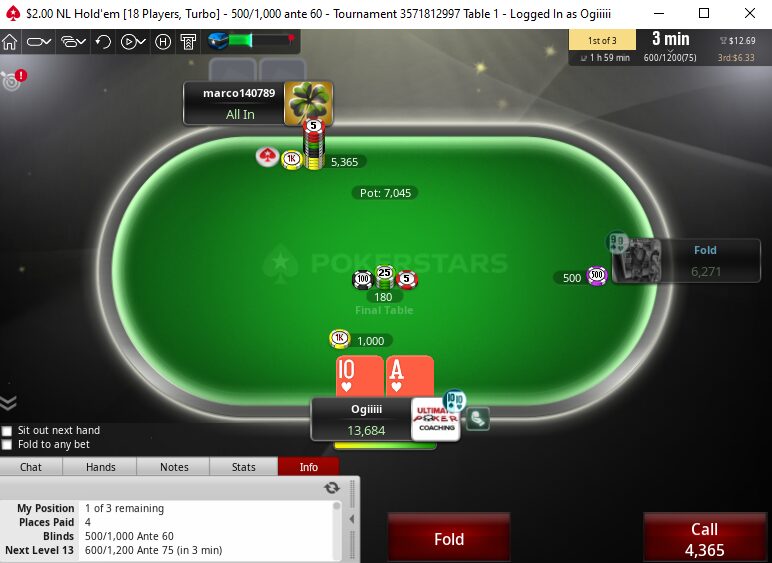
Experienced players fold when they feel their hand isn’t strong enough and the odds of winning are low. Folding is also common in early positions pre-flop in 9-max games when you have a mid-strength hand. Calling or raising from these positions could provoke aggressive moves like 3-bets and 4-bets, which would force those middle-strength hands to fold.
After folding, players cannot reveal the rank or suit of their hole cards to the remaining players.
When to Fold in Poker
Folding can save your money, but if you misuse it, you might also miss out on opportunities to win chips, reducing your potential profit. Therefore, it’s essential to understand the fold move and evaluate the table situation carefully. You should fold in the following cases:
- Your opponent has a stronger hand, regardless of the strength of your own cards.
- The pot odds aren’t worth calling, for example, when chasing a flush or straight draw.
- The opponent makes a big bet, and calling would put a large portion of your stack at risk.
- You’re on the bubble and trying to make it into the money. If you’re in this situation and see that other players have smaller stacks, it’s better to wait for them to bust. Even pocket aces might be worth folding in this scenario.
- Too many players are in the hand. Even pocket aces have low chances of winning against three or more opponents.

If you have the chance to check, use it. Check-fold is when you check and then fold after someone raises. Check-folding is a standard way to play weak hands.
Push-Fold in Poker
In some situations, players are forced to play push-fold poker to be as effective as possible. It’s generally optimal to start push-fold play when your stack is 12 big blinds or less. What does this term mean? As the name suggests, you must either push (go all-in) or fold. There’s no room for calling or raising.
In push-fold poker, you should only push with a strong hand and fold weaker hands. How do you know if your hand is strong enough to push? This is where the Nash push-fold chart comes in handy.

The numbers on the chart represent the minimum number of big blinds needed to go all-in from different positions with various hole cards (the left column). If your stack exceeds the number of big blinds indicated in the chart, then you should fold in those situations.
Fold Equity in Poker
It’s not enough to know when to fold yourself for success in poker; you also need to understand how often your opponent will fold to your raises. This concept is called fold equity, which you can read more about in the article linked here. You’ll also find a formula for calculating fold equity, helping you understand when to raise to make your opponent fold.
In short, fold equity is the probability that your opponent will fold to your raise. Each player’s fold equity is unique, and to calculate it accurately, you need to play against a specific opponent for a long time and collect statistics on their play.
So, fold in poker is a crucial and popular move. When used wisely, it can minimize your losses and increase your overall profitability in the long run.


