
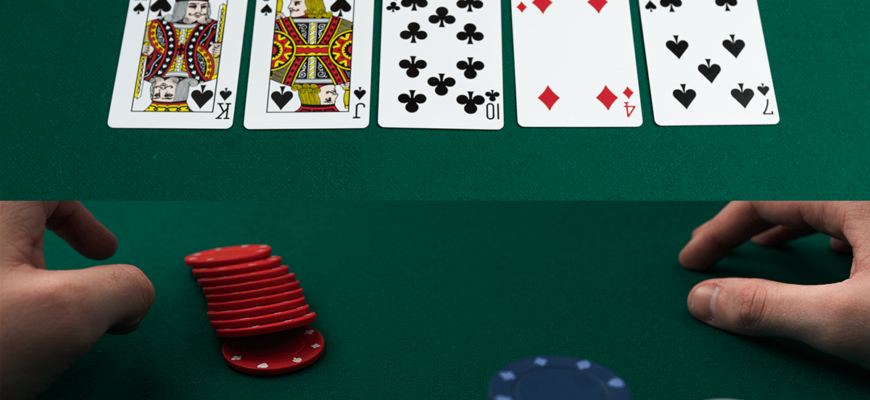
On the river, every decision is final. There are no more draws, no more turns to save you—just a complete board and a choice: bet or check, call or fold. Most players size their river bets based on hand strength alone: small with marginal hands, big with monsters. But this is a leak. The optimal river bet size depends not on your hand—but on the composition of your entire range relative to your opponent’s.
In this guide, we’ll break down how to use range analysis to choose the right river bet size for both value and bluffs. You’ll learn why a polarized range calls for overbets, why merged ranges demand small bets, and how to exploit opponents who ignore range dynamics. This is advanced strategy—but it’s the difference between printing money and leaking chips on the final street.
- Why Hand Strength Alone Fails on the River
- Polarized vs. Merged Ranges: The Core Concept
- When to Use Large or Overbets: Polarized Ranges
- When to Use Small Bets: Merged Ranges
- Reading Your Opponent’s Calling Range
- Blockers and Bluff Credibility
- Common River Bet Sizing Mistakes
- Tournament vs. Cash Game Adjustments
- Practical Framework: The 3-Step River Sizing Process
- Advanced Insight: GTO and Solver-Based Sizing
- Final Word: Bet Size Is a Signal—Make It Honest
Why Hand Strength Alone Fails on the River
If you only consider your own hand, you’ll under-bet value hands and over-bet bluffs—or vice versa. The river is a range-vs-range battle. Your bet size must make your opponent indifferent to calling with their bluff-catchers. That requires aligning your value-to-bluff ratio with your sizing.
For example, if you bet 50% of the pot, you can bluff up to 1/3 of the time and still be unexploitable. If you bet 200% of the pot, you can only bluff ~14% of the time. Your sizing dictates your bluff frequency—and your range must support it.
River bet sizing isn’t about how strong your hand is—it’s about how your entire range looks compared to what your opponent can call with.
Polarized vs. Merged Ranges: The Core Concept
Your river range typically falls into one of two categories:
- Polarized: A mix of very strong hands (sets, nut flushes) and pure bluffs (missed draws, air). No medium-strength hands.
- Merged: Mostly medium-strength value hands (top pair, two pair) with few or no bluffs.
Each demands a different sizing strategy.
When to Use Large or Overbets: Polarized Ranges
If your range is polarized, large bets (60–200% of pot) maximize value from your nut hands while allowing you to credibly bluff. Why? Because your opponent knows you either have the nuts or nothing—so they must call wider to prevent you from running wild.
Example: You raise preflop, bet flop and turn on A♠ K♦ Q♥ 7♣. River is 2♦. Your range includes AA, AK, and missed draws like J9s. An overbet shove here puts maximum pressure on KQ or AQ—hands that beat bluffs but lose to AA.
Overbets work best when you have nut advantages and your opponent’s calling range is capped (they can’t have the absolute nuts).
When to Use Small Bets: Merged Ranges
If your range is merged, small bets (20–40% of pot) extract value from weaker hands without risking a fold from the hands you beat. You don’t need to bluff often, so your opponent can’t call too wide without losing money.
Example: You check-call the flop and turn on a dry board like 9♣ 5♦ 2♠ 7♥. River is 3♣. Your range is mostly second pair or top pair with weak kickers. A small bet gets called by worse pairs and doesn’t lose much when you’re behind.
Small river bets are underused by most players. They print money in merged spots where your opponent can’t confidently fold second or third pair.
Reading Your Opponent’s Calling Range

Your sizing must account for what your opponent will actually call with. Ask:
- Are they a calling station? → Use larger value bets, bluff less.
- Are they a nit? → Bluff big, value bet small.
- Do they have a capped range? → Overbet for value.
For instance, if your opponent 3-bet preflop and called two barrels on a coordinated board, they likely have strong hands or draws. If the river bricks, their range is capped—they can’t have the nut flush if you hold the ace of that suit. This is your overbet spot.
Never overbet into a player who never folds. You’ll just lose more when you’re bluffing and get the same call when you’re value betting.
Sharpen your reads with how to read your opponents in poker.
Blockers and Bluff Credibility
Your hole cards affect how believable your bluffs are. Holding a blocker to the nuts (e.g., the A♠ on a spade-heavy board) makes your bluff more credible because you reduce the chance your opponent holds the flush.
But blockers also affect value betting. If you hold the king of hearts on a K♥ Q♥ J♠ board, you block top two pair—making it less likely your opponent has it. This might justify a larger bet, as their calling range is weaker.
Should you always bluff with nut blockers? Not always—but they make your bluffs far more effective, especially in polarized ranges.
For deeper insight, see how to use blockers in hand reading.
Common River Bet Sizing Mistakes
- Over-betting merged ranges—scaring away worse hands that would call a small bet
- Under-betting polarized ranges—leaving money on the table with nut hands and making bluffs less credible
- Ignoring opponent tendencies—bluffing large against calling stations or value betting small against nits
- Bet sizing based on pot size alone—a $200 pot doesn’t dictate bet size; your range does
Betting 75% of the pot with top pair on a wet board when your range is merged is a classic leak. Your opponent folds all worse hands and calls only with better ones—making your bet -EV.
Tournament vs. Cash Game Adjustments
In tournaments, ICM and stack sizes distort river dynamics. Near the bubble, players fold more—making large bluffs more effective. With short stacks, all-in river bets are common, so polarized ranges dominate.
In cash games, stacks are deep and players call wider. Small bets with merged ranges become more profitable, and overbets are reserved for clear nut-advantage spots.
In MTTs, a river overbet with 15 big blinds can force folds from hands like top pair—giving you the chips you need to survive.
Practical Framework: The 3-Step River Sizing Process
Before you bet on the river, ask yourself:
- Is my range polarized or merged? (Do I have only nuts/air, or mostly medium hands?)
- Is my opponent’s range capped? (Can they have the nuts, or are they stuck with second-best?)
- What will they actually call with? (Calling station? Nit? Balanced?)
If polarized + capped range → overbet.
If merged + they call wide → small bet.
If polarized but they never fold → check or small bet with value, skip bluffs.
Run this checklist silently before every river decision. It takes 10 seconds and prevents 80% of sizing errors.
Advanced Insight: GTO and Solver-Based Sizing
Modern solvers show that optimal river bet sizing is rarely “one size fits all.” On some boards, GTO uses multiple bet sizes: small for merged value, large for polarized bluffs/value.
For example, on a dry board like 8♣ 4♦ 2♠ 5♥ 9♣, solvers often use 33% and 150% sizings. The small bet extracts from medium pairs; the overbet jams when you have sets or bluffs.
Don’t try to replicate multi-size strategies without deep study. Start with one size per range type—polarized = big, merged = small.
Learn the foundation in GTO poker strategy.
Final Word: Bet Size Is a Signal—Make It Honest
Your river bet size tells a story. If your sizing doesn’t match your range, observant opponents will exploit you—calling your bluffs and folding to your value. But if your size aligns with your range composition, you become unpredictable and profitable.
Stop thinking “How much is my hand worth?” Start thinking “What does my range look like here—and what size makes my opponent suffer no matter what they do?”
“On the river, the size of your bet matters more than the strength of your hand.”
Your next session: pick one river spot per hour and consciously choose your size based on range—not hand strength. Note the result. Within a week, you’ll rewire your instincts.


