

Poker is not one game but a family of them, and the differences run deeper than most players assume. The cards you are dealt, whether you share a board, whether high or low hands win, and how betting is capped all change from variant to variant — and so do the skills that win. That is the real reason to look past Texas Hold’em: some games reward maths, others card-reading or patience, and the rarer the game, the softer the field tends to be against a mainstream player.
Here is the short version. Almost every variant sorts into three families — community-card games, stud games, and draw games — with mixed formats rotating several of them in turn. Texas Hold’em rules the community-card family and the game as a whole, Omaha is a clear second, and everything else trades popularity for a shot at weaker opponents. Below, each major variant is grouped by family, with the rules you need to sit down and play.
How the Main Poker Variants Group Together
Nearly every poker game falls into one of three families, and the family tells you how the cards are dealt before you learn a single rule.
- Community-card games. You get a few private hole cards and share a face-up board with the table. Texas Hold’em and Omaha live here.
- Stud games. No shared board — each player gets their own mix of face-up and face-down cards, dealt over several streets. Seven-Card Stud and Razz are the staples.
- Draw games. Cards stay private, and you improve your hand by discarding and drawing new ones. Five-Card Draw, 2-7 Lowball and Badugi belong here.
Different families reward different skills. Community-card games lean on board reading and position, stud on memory and tracking exposed cards, draw and lowball on discipline and hand selection — which is why learning a second family can hand you an edge over Hold’em-only players.
Is it worth learning variants beyond Hold’em? For most players, yes. No game beats Hold’em for the sheer number of tables, but the less popular a variant is, the more likely you are to sit with opponents who only half-know it — provided you have put in the work yourself.
Community-Card Games
Texas Hold’em
Texas Hold’em is the most popular form of poker today, though it hasn’t always held the crown — Stud and Draw games came first. At virtually every online site, Hold’em is the game with the most tables running. The aim is simple: win your opponents’ chips, either by holding the best hand at showdown or by betting hard enough that everyone else folds.
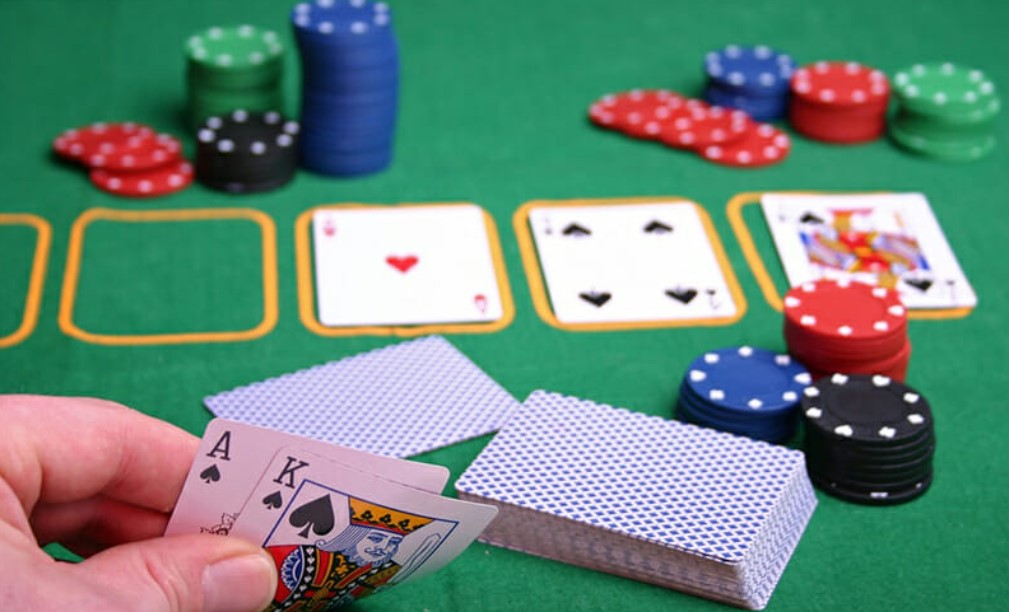
Each player is dealt two private hole cards and, over the hand, shares five community cards with the table. After the first betting round the dealer reveals the flop (three cards), then the turn and the river one at a time, with a betting round at each step. You make your best five-card hand from any mix of your two hole cards and the five on the board, and the strongest hand at showdown — or the last player left — takes the pot.
Two seats post a small and big blind to start the action, and most games run no-limit, so a single raise can be your whole stack. For the full walkthrough, see our guide to the rules of Texas Hold’em.
Omaha
Omaha is the natural next step from Hold’em and its clear runner-up in popularity. The structure is the same — the same betting rounds and the same five community cards dealt flop, turn, river — but each player starts with four hole cards instead of two.
The catch trips up almost every newcomer: in Omaha you must use exactly two of your hole cards and exactly three from the board, no more and no less. Four hole cards look like more freedom, but that fixed two-plus-three rule is stricter than Hold’em, not looser. Most games are pot-limit (PLO), which caps a bet at the current size of the pot.
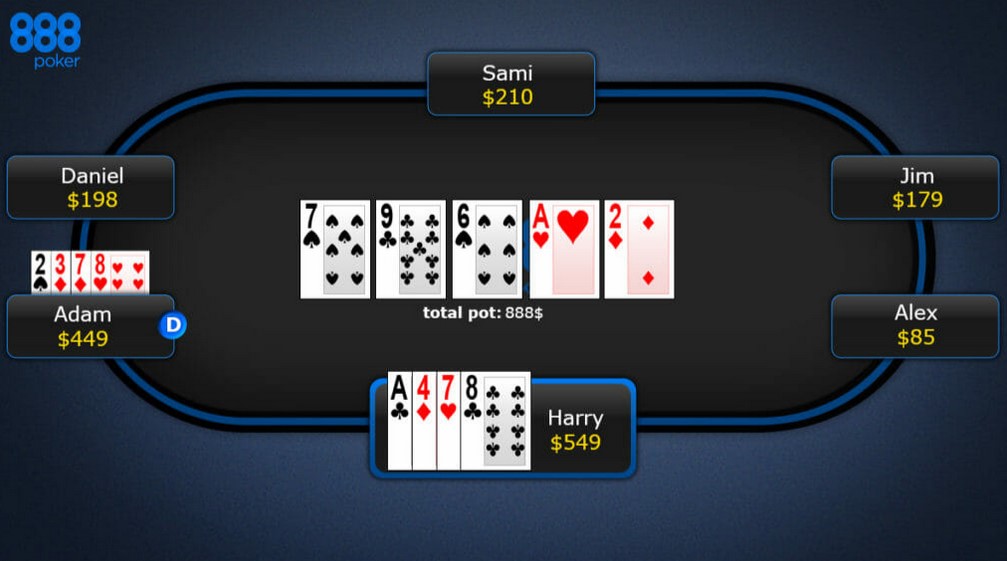
The most common Omaha mistake is “seeing” a flush that isn’t there. If only one of your four hole cards matches the suit on the board, you do not have a flush — you always play exactly two cards from your hand.
Omaha Hi-Lo
In standard Hold’em and Omaha the highest hand wins. Omaha Hi-Lo splits the pot between the highest hand (“Hi”) and the lowest qualifying hand (“Lo”).
To make a Lo you need five unpaired cards all ranked eight or lower — hence its other name, Omaha Eight-or-Better. The pot is then split between the best Hi and the best Lo; if no one qualifies for the Lo, the Hi hand scoops the whole pot. Aces play low as well as high, so A-2-3-4-5 is the strongest possible low.
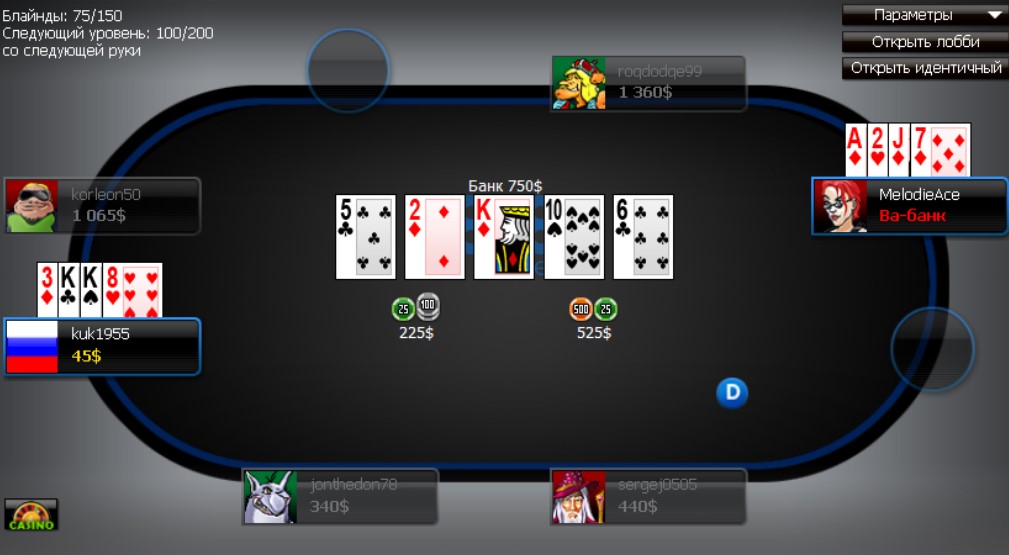
Straights and flushes don’t count against your low in Omaha Hi-Lo, so one hand can win both halves. Scooping the Hi and the Lo with a single holding is the outcome you’re hunting in this game.
Short Deck (Six-Plus Hold’em)
Short Deck, also called Six-Plus Hold’em, is a newer community-card variant that has surged in popularity, especially in high-stakes and Asian games. It plays like Hold’em with one big change: the deuces through fives are stripped out, leaving a 36-card deck.
Fewer cards reshuffle the rankings. Flushes become harder to make than full houses, so a flush beats a full house here, and straights come far more often. It is faster and more action-heavy than full-deck Hold’em, which is much of the appeal.
Stud Games
Seven-Card Stud
Stud is a different animal from the community-card games: there is no shared board, and each player builds a hand from seven of their own cards. You are first dealt three — two face-down and one face-up — then a betting round begins. If more than one player stays, a fourth card comes face-up, and the hand continues.
After the fourth card, betting continues, then a fifth and sixth arrive face-up and the seventh face-down, with a betting round after every card. The hand can end at any street once everyone but one player folds. There is a Hi-Lo version, Seven-Card Stud Eight-or-Better, that splits the pot between the highest and lowest hands.
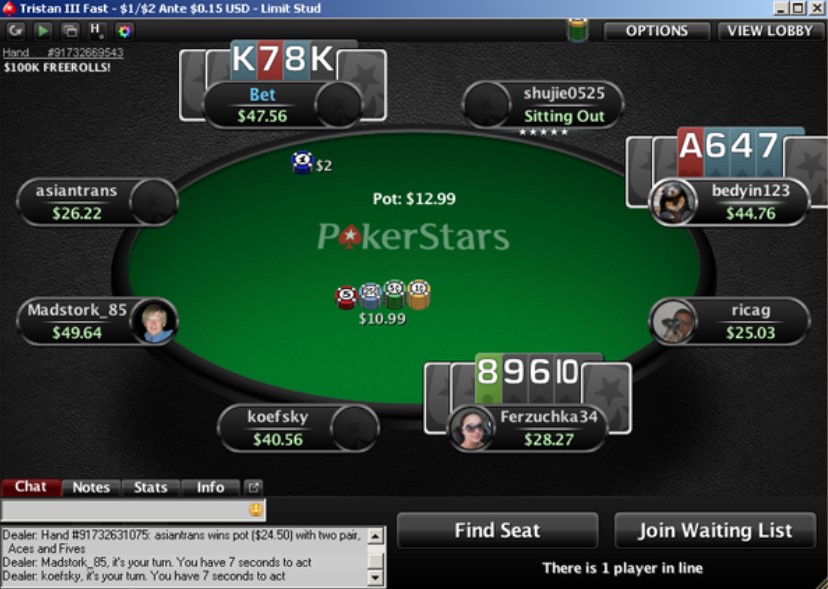
Stud is usually played limit, so bet sizes are fixed rather than open-ended like no-limit Hold’em. With four of every player’s seven cards on show, tracking exposed cards matters more than in any community-card game, which makes luck a smaller factor.
Razz
Razz is Seven-Card Stud turned upside down: the same seven-card, four-up mechanics, but the lowest hand wins — think of it as Seven-Card Stud Lo. Unlike the Hi-Lo split games, there is no minimum-card requirement to qualify.
Aces always play low, and straights and flushes don’t count against you, so the perfect Razz hand is A-2-3-4-5. It rewards patience and reading opponents’ boards far more than aggression.
Draw and Lowball Games
Five-Card Draw
Any variant with “draw” in the name lets you swap cards. In Five-Card Draw, each player gets five cards face-down; after a round of betting, you may discard any number and draw replacements from the deck.
Two versions are common. In the first, a single draw is followed by one more betting round and then showdown. In the second, you get two draws, each followed by its own betting round.

2-7 Lowball
2-7 Lowball runs on the same draw structure as Five-Card Draw, but you are chasing the worst hand rather than the best. The rankings are inverted, so weak cards win.
The best possible hand in 2-7 Lowball is 2-3-4-5-7 of mixed suits. Straights and flushes count against you — turning that “strong” poker hand into a losing one — and the ace is always high, so it is a bad card for your low.
This feels backwards at first, since the ace is usually your friend. In Hold’em, Omaha, Stud and Razz the ace can swing either way, high or low; in 2-7 it only ever counts high.
Badugi
Badugi is a rarer draw game with a lowball spirit close to 2-7. The twist is in the hand itself: the best holding is four low cards, no pair, and all four of different suits — a hand known as a “badugi.” The lower and more varied your four cards, the stronger you are.
Mixed Games: HORSE and Beyond
Mixed games don’t add a new variant so much as rotate several of them, switching format after a set number of hands or, in tournaments, each blind level. They test whether you are well-rounded rather than a one-game specialist.
The best known is HORSE — Hold’em, Omaha Hi-Lo, Razz, Seven-Card Stud and Seven-Card Stud Eight-or-Better in rotation. Formats like it are a staple of high-stakes live poker and a genuine test of range, since a leak in any single game shows up fast.
Which Poker Variant Should You Play?
The right variant depends on what you want from the game and where your edge is. Hold’em has the deepest player pools, the most learning material, and the most tables — the easiest place to start and the hardest place to stand out. The trade-off is real: the popular games give you endless action, while the rarer ones give you fewer tables but, often, weaker opposition.
Game selection is one of the strongest edges in poker. Genuinely master Omaha Hi-Lo, Razz or 2-7 and you’ll routinely sit with players who only half-know the rules — an edge you rarely find at a mainstream Hold’em table.
Match the game to your strengths, too. If maths and equity are your thing, the four-card swings of Omaha suit you; if you read people and remember cards, Stud and Razz reward it; if you prefer a simpler, disciplined game, Draw and 2-7 fit.
Don’t jump into an unfamiliar variant at real stakes just because the table looks soft. A game you only half-understand will cost you faster than any edge you hoped to find — learn it in play money or at micro-stakes first, then bring it to a real table.
Pick the variant that lets you use your skills best, learn its rules cold, and the rarer games can pay back the effort of learning them.


