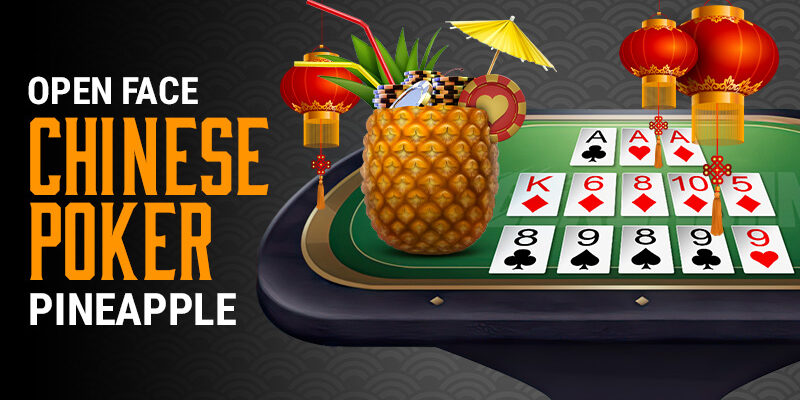
Chinese Poker Pineapple (OFC Pineapple) is a fast-paced, highly strategic offshoot of Open-Face Chinese Poker (OFC) that blends luck, hand-reading, and long-term planning into a uniquely engaging experience. Unlike traditional poker variants like Texas Hold’em or Omaha, OFC Pineapple doesn’t involve betting—instead, players compete by arranging 13 cards into three distinct hands to maximize scoring and avoid fouls.
Popularized in home games and high-stakes circles alike, Pineapple adds a twist to classic OFC by dealing three cards at a time and discarding one—introducing more complexity, deeper strategy, and a higher skill ceiling. In this comprehensive guide, you’ll learn the full rules, scoring system, common mistakes, and advanced tactics to dominate the game, whether you’re playing casually with friends or grinding online cash games.
- What Is Chinese Poker Pineapple?
- Basic Rules and Setup
- Number of Players and Starting Position
- Dealing and Discarding Process
- Hand Rankings and Scoring System
- Standard Hand Strength (Same as Traditional Poker)
- Scoring Mechanics
- Fouling: The Costliest Mistake
- Strategy: How to Win Consistently
- 1. Prioritize Back Row Stability
- 2. Manage Discards Wisely
- 3. Avoid “Fantasyland” Traps (Unless You’re Ready)
- 4. Read Opponents’ Laying Patterns
- Common Beginner Mistakes
- Advanced Tactics for Experienced Players
- Where to Play Chinese Poker Pineapple
- Conclusion: Think Like a Puzzle Solver
What Is Chinese Poker Pineapple?
Chinese Poker Pineapple is a variant of Open-Face Chinese Poker where each player is dealt 13 cards one at a time—but with a twist: starting from the second round, players receive three cards per street and must discard one immediately. The goal remains the same: split your 13 cards into three hands—front (3 cards), middle (5 cards), and back (5 cards)—that follow strict ranking rules.
Unlike 5-card draw or Hold’em, there are no betting rounds, bluffs, or showdowns in the traditional sense. Instead, players compare completed hands at the end of the round and score points based on hand strength and bonuses. Victory comes from consistent, optimal arrangement—not aggression or fold equity.
The “Pineapple” name comes from its similarity to Pineapple Open-Face Chinese, which itself borrows from the old Pineapple variant of Hold’em—where players are dealt three hole cards and discard one pre-flop.
Basic Rules and Setup
Number of Players and Starting Position
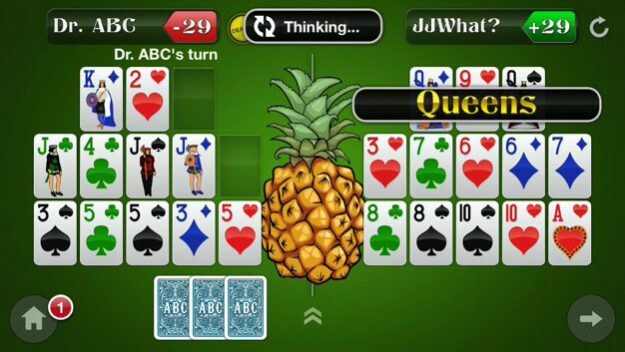
OFC Pineapple is typically played with 2–4 players. Each player starts with no cards face-up. The dealer deals one card to each player face-up to begin, establishing the initial “seed” for each hand.
Dealing and Discarding Process
After the first card, the game proceeds in “streets.” On each subsequent street:
- Each player receives three cards face-up.
- The player must immediately discard one of the three face-down (it’s dead and cannot be used).
- The remaining two cards are added to the player’s layout.
This continues until each player has 13 cards arranged across three rows:
– Front (Top Row): 3 cards – must be weaker than the middle
– Middle (Second Row): 5 cards – must be weaker than the back
– Back (Bottom Row): 5 cards – your strongest hand
A key rule: the back hand must be equal to or stronger than the middle, and the middle must be equal to or stronger than the front. Violating this results in a **foul**—a costly error that awards points to opponents.
Hand Rankings and Scoring System
Standard Hand Strength (Same as Traditional Poker)
Hand rankings follow standard poker hierarchy, with one exception: in the front (3-card) row, the strongest possible hand is Three of a Kind—straights and flushes don’t count in this row (in most rule sets; always confirm house rules).
Back and middle rows use full 5-card rankings:
– High Card → Pair → Two Pair → Trips → Straight → Flush → Full House → Quads → Straight Flush → Royal Flush
Scoring Mechanics
Scoring happens after all players complete their 13-card layouts. Each row is compared independently against the same row of each opponent:
- Win a row = +1 point
- Lose a row = –1 point
- Sweep (win all 3 rows) = +3 points + bonus (often +3 extra = total +6)
In addition, special hands trigger royalties (bonus points), paid per opponent:
| Front Row Royalties | Points |
|---|---|
| 666 or better | +1 |
| 777+ | +2 |
| 888+ | +3 |
| 999+ | +4 |
| TTT+ | +5 |
| QQQ+ | +6 |
| KKK | +7 |
| AAA | +8 |
| Middle/Back Royalties | Points |
|---|---|
| Full House (middle) | +2 |
| Quads (middle) | +8 |
| Quad 2s (back) | +4 |
| Quad Aces (back) | +13 |
| Straight Flush (middle) | +15 |
| Royal Flush (back) | +25 |
Royalties are awarded regardless of row comparison—if your hand qualifies, you get paid.
Fouling: The Costliest Mistake
A **foul** (or “scoop”) occurs when:
– The middle hand is stronger than the back
– The front is stronger than the middle
– The front contains a straight or flush (in standard rules)When a player fouls:
– They automatically lose all 3 rows to every opponent
– They pay 6 points (2 per row) to each opponent
– They forfeit all royalties, even if their hands qualifyFouling is common among beginners who overcommit to strong front or middle hands early. Always plan backward: build your back first, then middle, then front.
Strategy: How to Win Consistently
1. Prioritize Back Row Stability
Your back row must be the strongest—it’s the foundation of your entire layout. Early on, save high pairs, suited connectors, and potential flush/straight material for the back. Avoid placing strong cards in the front unless you have a monster like AAA.
2. Manage Discards Wisely
Each street gives you three cards and forces a discard. Ask yourself:
– Which card helps complete my back or middle?
– Which card is least likely to contribute to any row?
– Am I risking a foul by keeping a strong middle card?
Discarding isn’t just about what you keep—it’s about avoiding dead-end layouts.
3. Avoid “Fantasyland” Traps (Unless You’re Ready)
In many OFC Pineapple variants, if you make a very strong front hand—typically QQ or better (sometimes JJ+)—you enter Fantasyland on the next hand. In Fantasyland:
– You receive all 13 cards at once (not face-up)
– Opponents still play normally
– You’re protected from fouling
While powerful, chasing Fantasyland too aggressively leads to fouls. Only pursue it when your back and middle are already solid.
4. Read Opponents’ Laying Patterns
Unlike reading opponents in Hold’em, here you “read” by observing what rows they’re building. If an opponent is stacking hearts early, they may be chasing a flush—so avoid relying on heart-based draws yourself.
Common Beginner Mistakes
- Overvaluing high pairs in the front: Placing KK in the front early may seem smart, but if your back can’t beat it, you foul.
- Ignoring royalties: A full house in the middle is worth +2—even if you lose the row. Always factor royalties into your layout.
- Poor discard discipline: Keeping “maybe” cards in hopes they’ll fit later often leads to dead hands.
- Building top-down: Never set your front before your back. Work from strongest to weakest row.
- Not adapting to live cards: If two aces are already visible, your chance of making AAA drops drastically—adjust accordingly.
Advanced Tactics for Experienced Players
- Row balancing: Sometimes it’s better to accept a –1 on the front to secure +1 on middle and back.
- Royalty maximization: A back-row straight flush (15 pts) can outweigh winning all three rows without bonuses.
- Blocking opponents: If you see someone building a flush, keep suited cards that could block their nut potential.
- Fantasyland farming: Once in Fantasyland, you can aggressively chase monster hands—use it to snowball points.
Where to Play Chinese Poker Pineapple
While not as widely available as Hold’em, OFC Pineapple is offered on platforms like GGPoker and specialized poker apps. Many home games also adopt it due to its social, low-variance nature (no massive all-ins or bankroll swings).
It’s an excellent format for players tired of variance-heavy tournaments—here, skill dominates over luck in the long run.
Conclusion: Think Like a Puzzle Solver
Chinese Poker Pineapple isn’t poker in the traditional sense—it’s more like a strategic card puzzle with scoring. Success demands foresight, discipline, and the ability to adapt as new cards arrive. There’s no bluffing, no folding, and no luck-based all-ins—just pure hand construction and risk management.
Start by mastering the foul rules and basic royalties. Then practice discarding under pressure and planning your rows in sequence. Over time, you’ll develop an intuition for optimal layouts and start racking up sweeps and Fantasyland runs.
Grab a deck, challenge a friend, or fire up an online table—Chinese Poker Pineapple offers a refreshing, intellectually rewarding twist on the game we love.