Lowball poker flips traditional poker strategy on its head: instead of chasing straights, flushes, and full houses, your goal is to make the weakest possible hand. This counterintuitive format is a staple of mixed games like H.O.R.S.E. and a favorite among players who enjoy deep strategic nuance beyond standard high-hand formats.
In this expert-level guide, we’ll explore the rules, variants, hand rankings, and winning strategies for lowball poker—including Razz, 2-7 Triple Draw, and California Lowball. Whether you’re preparing for a mixed-game tournament or just expanding your poker repertoire, mastering lowball will sharpen your hand-reading, bluffing, and board-awareness skills like few other variants can.
- What Is Lowball Poker?
- Lowball Variants: Know the Differences
- Razz: 7-Card Stud for Low
- 2-7 Triple Draw (Deuce to Seven)
- A-5 Lowball (California Lowball)
- Lowball Hand Rankings: What Beats What?
- Strategic Principles for Lowball Success
- 1. Start with Strong Low Draws
- 2. Bluffing Is Powerful
- 3. Read Exposed Cards (In Stud Lowball)
- Common Lowball Mistakes
- Lowball in Mixed Games
- How Lowball Differs from High Poker
- Where to Play Lowball Poker
- Advanced Tip: Hand Reading in Razz
- Final Thoughts: Embrace the Inversion
What Is Lowball Poker?
Lowball is any poker variant where the lowest hand wins the pot. Unlike traditional “high” games (like Texas Hold’em), pairs, straights, and flushes are bad—they weaken your hand. The best possible hand is usually “wheel” (A-2-3-4-5), though this depends on the specific lowball rules in play.
Lowball appears in two main forms:
– Stud Lowball (e.g., Razz—7-card stud for low)
– Draw Lowball (e.g., 2-7 Triple Draw or A-5 Lowball)
Some games are “Hi-Lo split,” where the pot is divided between the best high hand and the best low hand (typically requiring 8 or better to qualify). For pure lowball, however, only the worst hand matters.
Lowball Variants: Know the Differences
Razz: 7-Card Stud for Low
Razz is the most popular stud-based lowball game. Each player receives seven cards (three down, four up), and the lowest five-card hand wins. Straights and flushes do not count against you in Razz—so A-2-3-4-5 is the nuts, even if suited.
For a full breakdown of rules and strategy, see our guide to Razz Poker: The 7-Card Stud Low and Rules of Razz Poker.
2-7 Triple Draw (Deuce to Seven)
This is the most common draw-based lowball format. Players receive five cards and get up to three chances to discard and draw new ones. Crucially, in 2-7:
– Straights and flushes do count against you
– Aces are always high (bad)
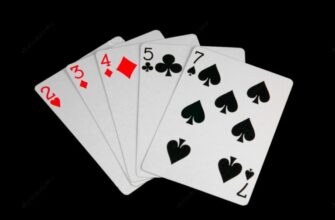
– The best possible hand is 7-5-4-3-2 offsuit (hence “2-7”)
Example: 8-6-4-3-2 is worse than 7-5-4-3-2. A hand like A-2-3-4-5 is actually a very weak straight—avoid it!
A-5 Lowball (California Lowball)
In this variant—often played as 5-card draw—straights and flushes are ignored, and aces are low (good). The best hand is again A-2-3-4-5 (the wheel), and pairs are the enemy.
A-5 is less common in tournaments but appears in home games and some online cash tables.
Lowball Hand Rankings: What Beats What?
Hand strength in lowball is ranked from the highest card down. Compare hands left to right after sorting cards from lowest to highest.
Example (2-7 rules):
– Hand A: 7♦ 5♠ 4♥ 3♣ 2♠ → “7-5-4-3-2”
– Hand B: 8♣ 6♦ 4♠ 3♥ 2♣ → “8-6-4-3-2”
Hand A wins because 7 < 8. Even though both share 2-3-4, the first differing card decides the winner.
Avoid at all costs:
– Any pair (even 2-2 is unplayable)
– Straights (in 2-7)
– Flushes (in 2-7)
– Hands with a high card of 8 or more (in early streets)
Strategic Principles for Lowball Success
1. Start with Strong Low Draws
In Razz or A-5, aim for hands with A-2-3 in the hole. In 2-7, look for 2-3-4-x-x with no pairs and minimal high cards.
Strong starting hands in 2-7 Triple Draw:
– 2-3-4-5-7 (pat or one-card draw)
– 2-3-4-6-x (one-card draw to 6 or 7 low)
– 2-3-5-6-8 (two-card draw, but playable)
2. Bluffing Is Powerful
Because everyone is trying to make a weak hand, it’s often hard to know if your opponent succeeded. A well-timed bluff—especially on the final draw—can steal the pot from a marginal low hand.
In 2-7 Triple Draw, the player in position can bet aggressively even with a weak hand, representing a pat 7 or 8-low.
3. Read Exposed Cards (In Stud Lowball)
In Razz, your opponents’ upcards reveal what low cards are “dead” (unavailable). If you see three 4s on the board, your 2-3-5 becomes much stronger.
Track dead cards religiously—this is where reading your opponents merges with combinatorics.
Common Lowball Mistakes
- Chasing weak lows: Drawing to an 8-low in 2-7 Triple Draw against a pat 7 is almost always –EV.
- Overvaluing “smooth” hands: 6-4-3-2-A looks pretty in A-5, but in 2-7 it’s a terrible straight.
- Ignoring position: In draw lowball, acting last gives you huge informational advantage—use it to bluff or fold wisely.
- Folding too often: In Razz, even a rough start (e.g., 3-5-9) can improve. Don’t fold prematurely if you have live low cards.
Lowball in Mixed Games
Lowball rarely appears as a standalone tournament, but it’s a core component of H.O.R.S.E.:
– H = Hold’em
– O = Omaha Hi-Lo
– R = Razz
– S = Seven-Card Stud
– E = Stud Hi-Lo (8 or better)
Mastering Razz and 2-7 prepares you for the “R” and part of the “E” in H.O.R.S.E., giving you an edge over players who only know flop games.
How Lowball Differs from High Poker
| Concept | High Poker (Hold’em) | Lowball (2-7 or Razz) |
|---|---|---|
| Goal | Make the strongest hand | Make the weakest hand |
| Pairs | Good (often winning) | Disastrous (usually losing) |
| Ace | High (A-K is premium) | Low in A-5 (good), high in 2-7 (bad) |
| Bluffing | Common on scary boards | Common on final streets due to uncertainty |
Where to Play Lowball Poker
While lowball is rare in mainstream online poker, it appears in:
– Mixed-game tables on GG Poker and PokerStars
– Live casinos with H.O.R.S.E. rotations
– Private home games (excellent for variety)
If you’re building a bankroll, start with small-stakes mixed cash games rather than tournaments. Unlike freerolls, lowball rarely offers free entry—but the skill edge is massive if you study.
Advanced Tip: Hand Reading in Razz
In Razz, your opponent’s door card (first upcard) sets the tone. If they show a 7 and you have a 5-door, you likely have them beat early. But if they get a 2 or 3 on Fourth Street, your hand may be dead.
Use position and betting patterns: a player who checks on Sixth Street probably missed their low and is weak.
Final Thoughts: Embrace the Inversion
Lowball poker rewards patience, precision, and the ability to think backwards. By learning to win with “bad” hands, you’ll develop a more holistic understanding of poker mechanics—from equity to bluffing to hand elimination.
Start with Razz or 2-7 Triple Draw in play-money games. Focus on starting hand selection, track dead cards, and don’t fear bluffing. In a world obsessed with aces and flushes, the player who masters the low hand often walks away with the whole pot.