If you know the rules of Texas Hold’em, learning Omaha should be a breeze. These two games are almost identical in structure, but differ quite a bit in terms of dynamics and intensity. The biggest difference? In Omaha, each player is dealt four hole cards instead of two. Plus, to form a hand, you must use exactly two of your hole cards along with three community cards—no more, no less. In Hold’em, on the other hand, you can use any number of your hole cards to complete a hand.
Key Rules of Omaha
We won’t go over all the rules in depth, just the key differences from Texas Hold’em. Like Hold’em, Omaha uses big and small blinds as forced bets. After the blinds are posted, each player receives four hole cards, and the first betting round begins, just like in Hold’em. Then, the dealer reveals three community cards (the flop).
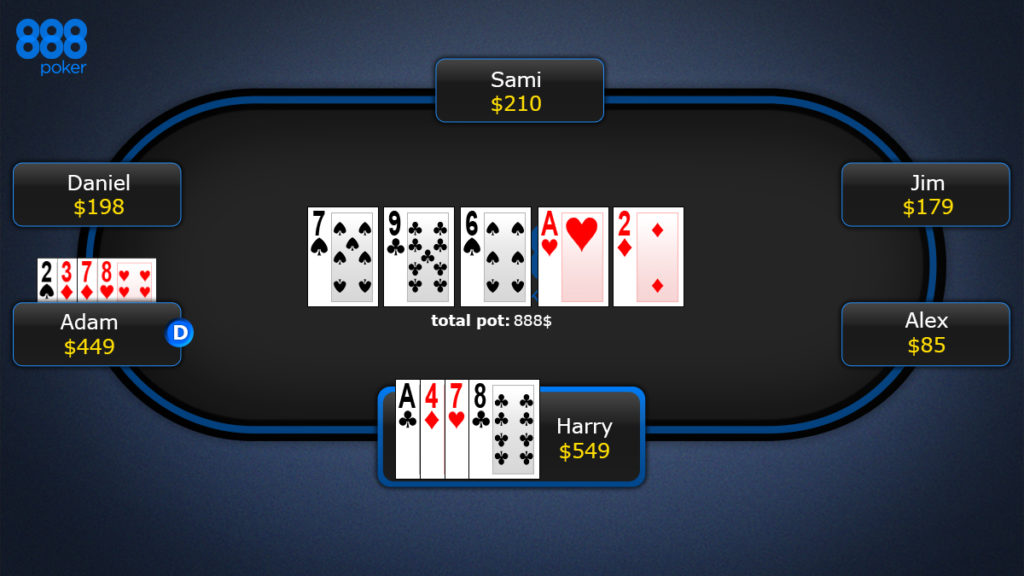
At this stage, you’ll need to assess the strength of your hand by combining two of your four hole cards with three of the community cards. Because of this, you’ll see stronger hands more often in Omaha, making the game faster and more aggressive, as players frequently aim for higher combinations and stay in the action. This also means pots grow rapidly.
The next two stages, the turn and river, are just like in Hold’em. However, there’s a twist during the showdown: each player must reveal exactly two of their four hole cards to make their final hand. The hand rankings are the same as in Hold’em.
Variants of Omaha
Omaha poker has four main variations, depending on the rules:
- Omaha Hi
- Omaha Hi-Lo
- 5-Card Omaha
- Oklahoma Poker
Rules of Omaha Hi-Lo
In Omaha Hi-Lo, the pot is split between two winners—one with the highest hand (the “hi” hand) and one with the lowest (the “lo” hand). The hi hand follows the standard ranking: Royal Flush, Straight Flush, Four of a Kind, and so on.
The lo hand, on the other hand, is the weakest possible hand. This means it must not contain any pairs or high cards. According to Omaha Hi-Lo rules, a lo hand has specific requirements: it must use two hole cards and three community cards, with each card ranking lower than 8.
A2345 is the best lo hand possible. Straights and flushes don’t count for lo hands, so the cards could be suited, and the Ace here counts as the lowest card.
One player can potentially win both the hi and lo pots. For example, if they have two Aces, one can complete the high hand while the other completes the low hand. If no one manages to form a valid lo hand, the entire pot goes to the hi hand.

Rules of 5-Card Omaha
How do you play 5-Card Omaha? It’s almost identical to standard Omaha, except you’re dealt five hole cards instead of four. This version is actually the oldest Omaha variant. In 5-Card Omaha, you can choose two cards from five, slightly increasing your odds of building a strong hand. This makes the game fast and action-packed. However, finding opponents for 5-Card Omaha is tough nowadays, both online and offline.
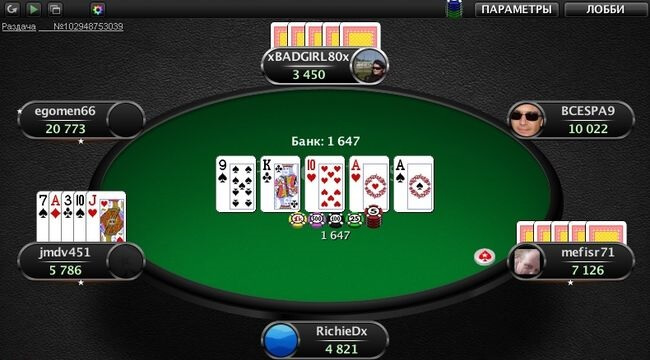
Oklahoma Poker
Oklahoma is a new Omaha variation introduced around 2010, combining aspects of both classic Omaha and Texas Hold’em.
The rules of Oklahoma Poker are similar to those of Omaha, but by the river, each player is left with only two hole cards instead of four. The game begins with players having four hole cards pre-flop, like in regular Omaha. When the flop is dealt, betting starts, and to continue, each player must discard one of their cards. The process repeats on the turn, leaving everyone with two hole cards. At the showdown, each player builds their hand using exactly two hole cards and three community cards.
Betting Structures in Omaha Variants
Omaha, Omaha Hi-Lo, 5-Card Omaha, and Oklahoma Poker can all be played with fixed-limit or pot-limit betting. There’s no such thing as no-limit Omaha.
In fixed-limit Omaha, players can make a maximum of four bets per round. During the first two betting rounds, the bet size is limited to the big blind, while in the third and fourth rounds, it’s limited to twice the big blind. In online poker, a table labeled 1$/2$ means that the first rounds are capped at $1, while the last two rounds go up to $2. In no-limit or limit poker, this would refer to a small blind of $1 and a big blind of $2, so it’s essential to know the difference!
In pot-limit Omaha, the maximum bet cannot exceed the total pot size, including any amount needed to call. For example, if the pot is 100 chips, and the previous player bets 100, the maximum bet would be 300 chips (the pot, plus the 100 needed to call).
These are the essential rules of Omaha and its variations. In our next article, we’ll cover Omaha strategies, which differ significantly from the familiar Hold’em strategies.